Weekly Market Intel Digest: May 4, 2026 – Gigawatt Campuses, Grid Deadlocks, and Agentic Silicon

The primary constraint in the global AI hardware supercycle has undergone a fundamental shift. While 2024 and 2025 were defined by "GPU scarcity": a period where lead times for NVIDIA H100 and H200 silicon dictated project timelines: the market has now entered the era of "Infrastructure Scarcity."
Capital is no longer the bottleneck; the availability of high-voltage power, grid interconnection slots, and secure on-premises deployment options are the new governing variables. As the industry moves toward the massive scale of Blackwell (B200) and Vera Rubin architectures, the technical and economic floor of the data center is being rewritten. This week’s digest analyzes the transition from megawatt-scale to gigawatt-scale campuses, the tightening grid deadlock, and the silicon split driving the "agentic" inference era.
The Gigawatt Standard: The Crusoe-Microsoft Campus Analysis
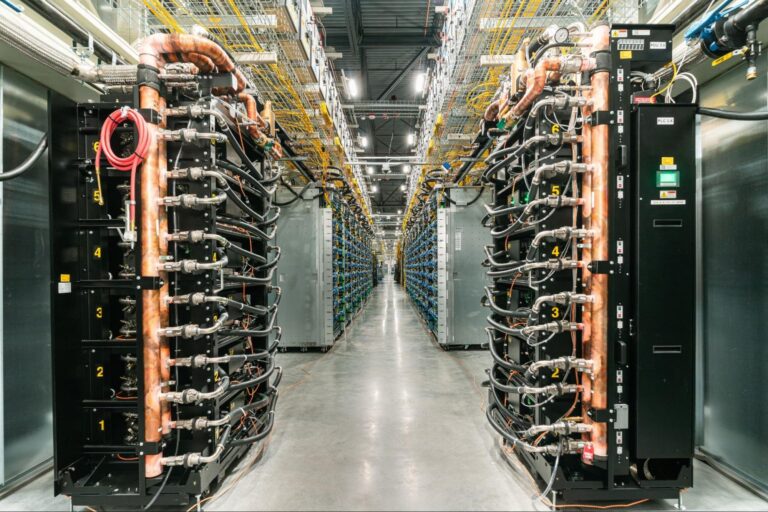
The announcement that Crusoe Energy is building a 900 MW AI campus in Abilene, Texas, for Microsoft signifies a scaling milestone. This project contributes to a site total of 2.1 GW, establishing the "Gigawatt Campus" as the new baseline for frontier model training.
From a supply-chain perspective, this reflects a strategic pivot in hyper scaler data center financing. Hyperscalers are increasingly bypassing traditional multi-tenant colocation models in favor of specialized partnerships that leverage "stranded" or underutilized energy assets. The Abilene site’s scale is necessary to support the 120kW+ rack densities required by GB200 NVL72 clusters. For businesses involved in GPU finance, this massive consolidation of power capacity at single sites creates a concentrated risk/reward profile: asset value is now as much about the "socket" (the physical power and cooling slot) as it is about the silicon itself.
The Grid Lockdown: Infrastructure as the Supply-Chain Ceiling
Despite record-low vacancy rates in major data center hubs, U.S. pipeline additions fell by 50% in the final quarter of 2025. This is not a lack of demand, but a collision with the "Power Wall." Grid interconnection backlogs have become the definitive ceiling for AI expansion. In core markets like Northern Virginia and Silicon Valley, lead times for new high-voltage connections now exceed the typical 18-month GPU refresh cycle.
This grid deadlock has direct implications for data center decommissioning. As new sites become harder to bring online, the value of existing floor space with established power increases. We are seeing a trend of "infrastructure-led IT asset disposition," where older clusters (A100 and early H100 nodes) are being liquidated not because they lack compute utility, but because their 10kW–20kW power envelopes are inefficient compared to the revenue-per-watt potential of Blackwell-generation systems.
The Agentic Shift: Google’s 8th Gen TPU Architecture
The rollout of Google’s 8th Generation TPUs: specifically the TPU 8t for training and TPU 8i for inference: marks the formalization of the "Agentic Era" hardware split.
"Agentic" AI refers to systems designed for iterative reasoning, tool use, and complex orchestration rather than simple text completion. This shift changes the compute profile:
- TPU 8t (Training): Optimized for the massive, sustained throughput required to build frontier models.
- TPU 8i (Inference): Focused on low-latency, high-efficiency response generation.
For those managing GPU remarketing portfolios, this specialization is critical. As training workloads consolidate into the hands of the top five hyperscalers (who now control 71% of global AI compute), the secondary market for mid-life accelerators is being buoyed by the explosion in inference demand. Older H100 and A100 units are finding a second life as "inference workhorses" in agentic pipelines where the extreme bandwidth of 1.6T networking is less critical than raw memory capacity and price-per-token efficiency.
Sovereign and Secure AI: Gemini Air-Gapped Deployments
While the "Gigawatt Campus" represents the centralization of AI, the emergence of "Sovereign AI" represents its necessary fragmentation. Google and Cirrascale’s deployment of the Gemini frontier model on air-gapped Dell hardware: specifically a single PowerEdge server with an 8x NVIDIA GPU baseboard: signals a growing market for secure, localized compute.
This turnkey solution for defense and healthcare sectors highlights a move away from the public cloud for highly regulated data. From an asset management perspective, these deployments represent a high-value, high-security niche for IT asset disposition. Decommissioning these air-gapped systems requires specialized data destruction protocols that go beyond standard SSD wipes, as sensitive weights and data can persist in High Bandwidth Memory (HBM) and adjacent GPU firmware layers.
Strategic Takeaways for GPU Asset Management
As the market matures, the technical valuation of AI hardware must account for the broader infrastructure stack.
- Technical Valuation over Depreciation: Traditional 5-year depreciation schedules are obsolete. Secondary market value is now driven by technical configuration (HBM3e capacity, 800G vs. 1.6T networking compatibility) and deployment fit. GPU Resource’s proprietary valuation tools provide granular insights that surpass standard commodity pricing models.
- Infrastructure as a Gating Factor: Liquid cooling and power density are now the primary drivers of hardware liquidity. A system's resale value is increasingly tied to its ability to be redeployed within the 120kW rack envelopes of modern data centers.
- Active Remarketing Strategy: With the Vera Rubin platform on the horizon, the "digital lettuce" problem: where hardware value wilts rapidly: is accelerating. Proactive remarketing of H100 and H200 clusters before mass Blackwell saturation is essential for capital recovery.

The transition into the AI-native infrastructure era requires a shift from passive disposal to active supply-chain management. Understanding the interplay between gigawatt-scale power, grid constraints, and specialized silicon is the only way to maintain a competitive edge in the high-performance compute market.
For more detailed analysis of secondary market trends, view our latest GPU Pulse Market Report.
Contact GPU Resource
Whether you are scaling up to Blackwell or liquidating legacy clusters, GPU Resource provides the technical expertise and market access required to optimize your infrastructure lifecycle.
For custom pricing requests, technical valuation analysis, or to connect with our buyer/seller network, contact us at info@gpuresource.com. To stay ahead of the next market shift, monitor our real-time Market Pulse tools.