The New Compute Supply Chain: What’s Really Driving the World’s Largest AI Data Centers
The AI hardware race is no longer just about who makes the fastest chip. It’s about who controls the full stack — silicon, interconnect, cooling, and software — and what happens to that infrastructure when it gets retired.
Three hardware families are dividing the market
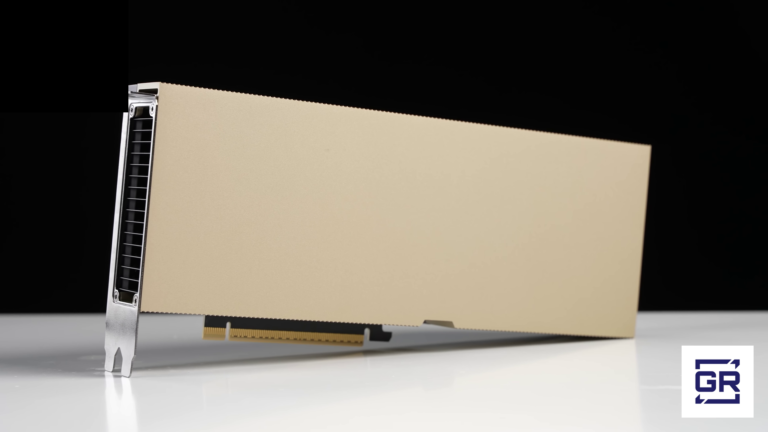
NVIDIA still dominates. Its Blackwell architecture generated $115.2 billion in data center revenue in fiscal year 2025, holding somewhere between 75–86% of the AI accelerator market. The DGX SuperPOD systems built on Blackwell Ultra have repositioned NVIDIA less as a chip vendor and more as a full-stack AI infrastructure provider. Its next-generation Vera Rubin platform is expected later this year.
AMD is the credible second, with its MI300X and MI350 Instinct accelerators pulling in an estimated $10 billion in data center revenue in 2025. Intel’s Gaudi line remains present but distant.
The more structurally significant shift is happening in custom silicon. Google, Amazon, and Microsoft are all building proprietary ASICs — chips designed specifically for their own workloads, reducing dependence on NVIDIA. Custom ASIC shipments from cloud providers are projected to grow 44.6% in 2026, versus 16.1% for GPUs. AI ASIC revenue overall is forecast to reach $84.5 billion by 2030.
Google’s Ironwood Superpod is unlike anything built before
Google’s seventh-generation TPU — codenamed Ironwood — represents the clearest picture of where hyperscale AI infrastructure is heading.
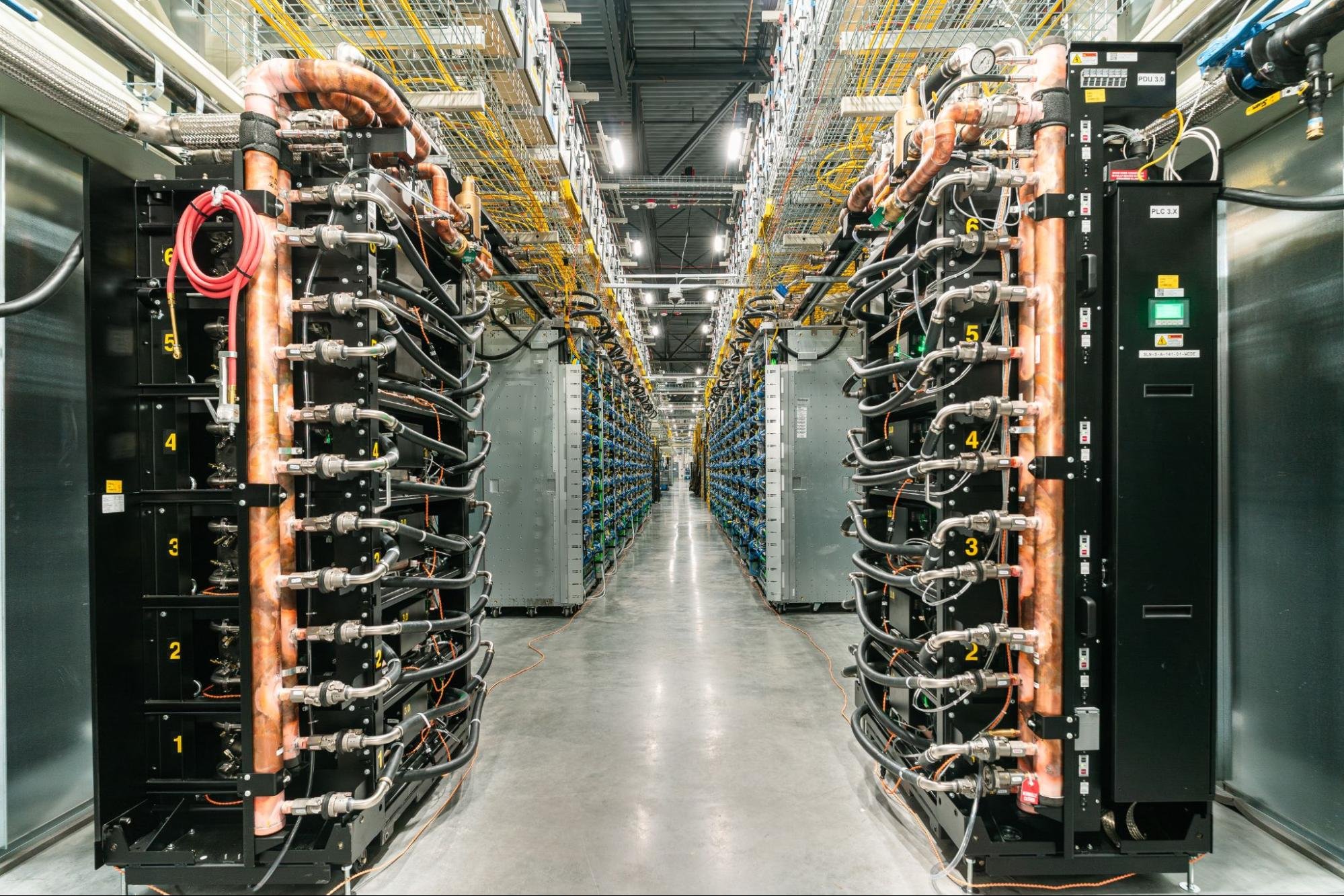
A single Ironwood Superpod connects 9,216 chips via a 9.6 Tb/s Inter-Chip Interconnect network and operates as one unified compute domain — not a cluster of smaller systems. Each chip delivers 4,614 TFLOPs of peak compute, more than 16 times the performance of Google’s TPU v4 from 2022. The full pod delivers 42.5 ExaFLOPS of FP8 compute and provides access to 1.77 petabytes of shared high-bandwidth memory across 144 liquid-cooled racks.
What makes this architecturally distinct is Optical Circuit Switching. Rather than a fixed physical topology, OCS creates a dynamic, reconfigurable optical fabric that routes around failed nodes, provisions compute slices of any size, and maintains uninterrupted service at scale. A single fully loaded Ironwood rack can draw more than 100kW — more than ten times the power density of a traditional enterprise server rack.
Anthropic has committed to deploying up to one million Ironwood TPUs to scale its Claude models. Google’s Gemini models train and serve on this same infrastructure. Multiple Superpods can be chained via Google’s Jupiter datacenter network into clusters of hundreds of thousands of chips.
What this means for enterprise data centers
Most enterprise data centers were built for 5–10kW per rack. Modern AI compute racks run at 20–60kW for GPU hardware and 80–100kW in hyperscale configurations. That gap isn’t bridgeable with minor upgrades — it requires new power distribution, liquid cooling infrastructure, and in many cases, an entirely different facility.
The refresh cycle is also compressing. Enterprise servers historically ran five-to-seven year lifecycles. AI accelerators are turning over in two to three years as each generation makes prior hardware economically uncompetitive for frontier workloads.
The ITAD challenge nobody is talking about
The Global Data Center ITAD market was valued at $14.6 billion in 2025 and is projected to reach $25.6 billion by 2035 — driven substantially by accelerating AI hardware refresh cycles. Iron Mountain’s Asset Lifecycle Management division reported 119% revenue growth in 2024. Sims Lifecycle Services repurposed 4.5 million units in a single six-month period, an 80% increase year-over-year.
But retiring a TPU Superpod in 2028 or 2029 will be categorically different from retiring a rack of H100s. Google’s TPU hardware is proprietary and deeply integrated. There is no established secondary market for OCS switching fabric, custom ICI interconnect hardware, or the HBM arrays that have been running frontier model training. The liquid-cooled chassis require specialized decommissioning protocols. The data destruction requirements for 1.77 petabytes of HBM — which may contain proprietary training data — are orders of magnitude more complex than wiping a standard NVMe drive.
For ITAD providers, the window to build this capability is now, not when the first Superpods come offline. That means R2v3 certification, NIST SP 800-88 Rev. 2-compliant sanitization for HBM-class storage, documented chain-of-custody programs built for high-value GPU and accelerator assets, and the logistics infrastructure to handle 144-rack pod footprints at scale.
The secondary market for retired NVIDIA H100 and H200 hardware is already active and growing. The market for retired custom silicon and TPU infrastructure will be thinner — but the value recovery opportunity in copper, rare earth materials, and reusable subsystems will be significant for those positioned to capture it.
The AI hardware supply chain is being built at a pace and scale the industry has never managed before. The back end of that chain — secure retirement, value recovery, and responsible disposition — needs to scale just as fast.
Sources: Google Cloud, WCCFtech, ServeTheHome, SemiAnalysis, Yole Group, DC Market Insights, Inteleca, Resource Recycling, ITAD Daily — April 2026