The Era of Agentic Infrastructure
Market Shift: From Blackwell to Vera Rubin
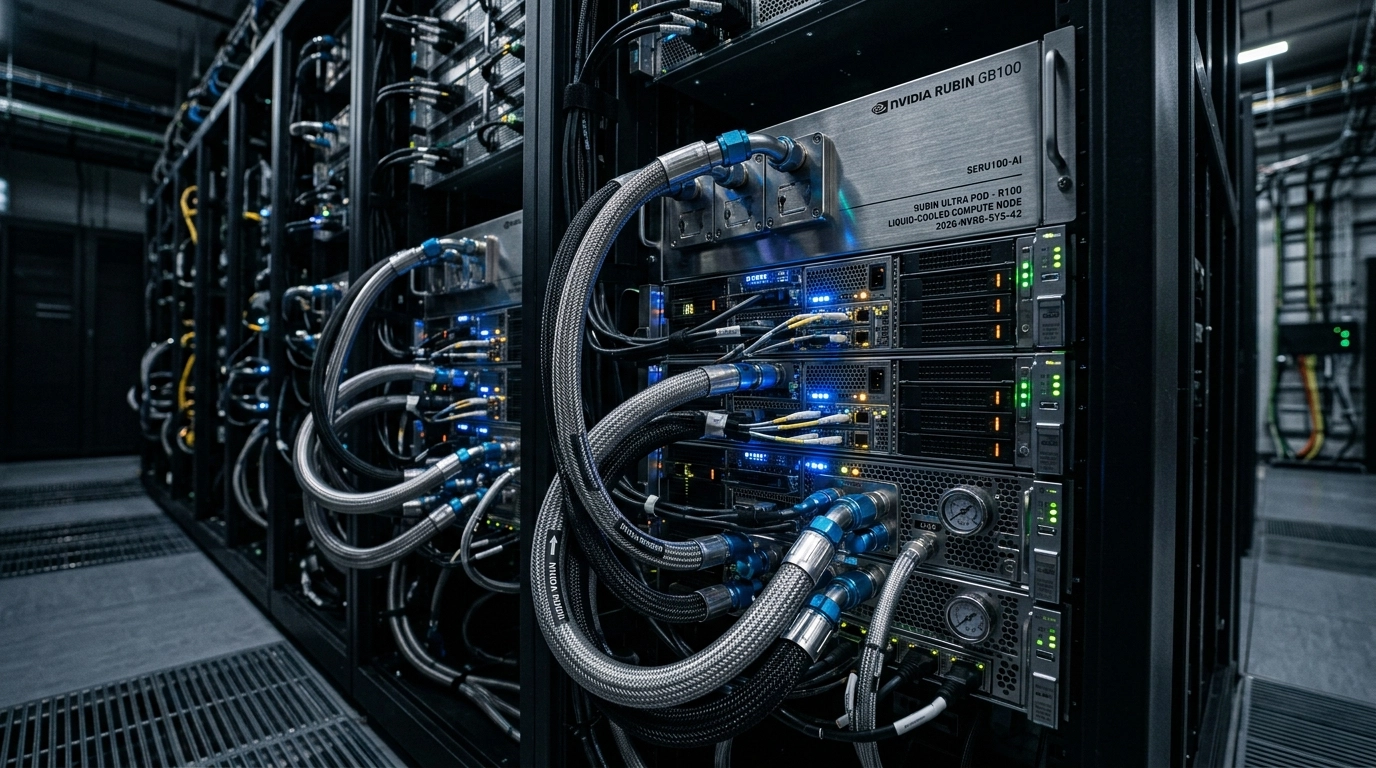
March 31’s core market signal is that NVIDIA’s roadmap is moving the center of competition from accelerator selection to full-rack architecture. Blackwell already pushed the market toward integrated GPU, CPU, memory, networking, and thermal design decisions at the system level. Vera Rubin extends that shift further. The practical implication is that buyers are no longer evaluating only FLOPS, memory capacity, or model throughput in isolation; they are evaluating whether their sites, network fabrics, and service partners can support denser, more tightly coupled AI infrastructure without introducing failure points at the rack and row level.
Rubin’s expected use of HBM4 and higher compute density matters because it changes the balance of the bottlenecks. During the H100 cycle, many operators were constrained primarily by GPU allocation and lead times. In the Blackwell-to-Rubin transition, constraints increasingly migrate to supporting infrastructure: power distribution units, busway design, rear-door heat exchangers, liquid loops, CDU availability, high-density optical links, and the serviceability of integrated rack systems. This is a materially different procurement environment from the early H100 market, where the GPU itself dominated the conversation. In the Rubin era, the limiting factor is often whether the facility and network stack can absorb the platform.
Infrastructure Constraint: The 120kW+ Rack Problem
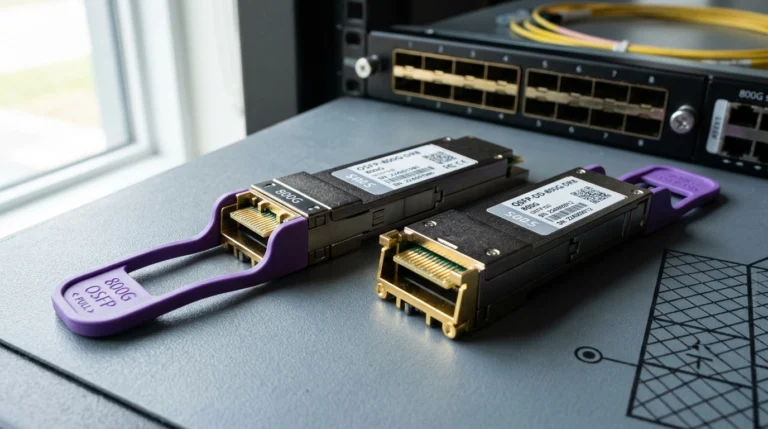
The move toward 120kW+ racks is not a simple extension of existing H100-era deployments. Many enterprise and colocation environments were designed around 15kW to 30kW assumptions, with some newer halls stretching higher through targeted retrofits. Rubin-class and adjacent rack-scale AI systems force a more disruptive redesign. At these densities, operators must address not only utility power availability, but also in-room distribution, liquid cooling redundancy, floor loading, service clearance, and thermal interactions between compute, switching, and optics. Networking adds another layer of difficulty as 800G and emerging 1.6T designs increase power draw and thermal concentration in the optical and switch domains alongside the GPUs.
This matters for market timing. The industry often treats next-generation accelerator launches as if deployment follows product announcement on a straight line. In practice, power and cooling upgrades create staggered adoption curves. Some hyperscale and purpose-built AI facilities can absorb Blackwell and Rubin-class systems quickly. A larger portion of the market will move more slowly because the rack can arrive before the site is ready. That lag has downstream effects on hardware circulation, lease extensions, temporary redeployment strategies, and secondary-market demand for prior-generation platforms that fit inside current infrastructure envelopes.
Memory Economics: Why HBM4 Changes Agentic AI Economics
HBM4 is not just a specification upgrade; it is a systems-level enabler for larger context windows, more persistent memory residency, and higher concurrency in agentic AI workflows. Agentic systems place different pressures on infrastructure than single-pass training or straightforward inference. They often involve iterative reasoning, multi-step tool use, retrieval pipelines, orchestration layers, and persistent session state. That increases the value of memory bandwidth and capacity because more of the working set can remain local to the accelerator complex instead of moving across slower tiers. In that environment, memory architecture becomes a direct determinant of throughput, latency stability, and cost per useful task completed.
The result is that HBM4-equipped Rubin systems are likely to be positioned for the highest-value inference and orchestration workloads, while H100, H200, and portions of the Blackwell installed base continue to serve a wide range of production demand. That creates a more layered market than the headline cycle suggests. Not every enterprise agentic deployment requires the newest rack-scale platform, particularly where power ceilings, budget discipline, or software maturity remain limiting factors. As a result, the market should expect continued demand for prior-generation GPUs in tuned inference clusters, private AI environments, and regional capacity builds where operators prioritize deployment certainty over absolute peak density.
Secondary Market Implications for H100 and H200 Fleets
That transition has direct implications for asset recovery and remarketing. As Rubin and Blackwell systems absorb premium capex, H100 and H200 fleets do not become obsolete on a normal enterprise server timeline. They remain economically relevant assets with meaningful second-life value, particularly in inference, fine-tuning, test environments, sovereign AI projects, and capacity-constrained regional builds. For many operators, the incorrect move is to process these systems through conventional ITAD channels that treat them like generic end-of-life technology. The more disciplined approach is to evaluate configuration-specific resale demand, remaining market depth, interconnect compatibility, and the timing of buyer demand relative to new-platform rollout.
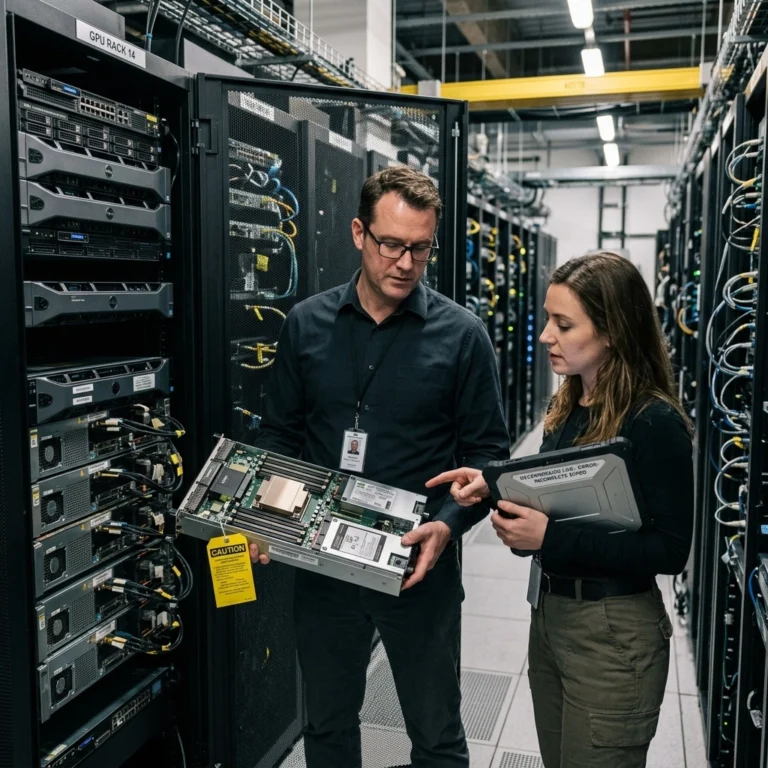
GPU Resource’s role sits directly in that decision chain. Certified asset recovery, secure decommissioning, and remarketing are now part of the AI infrastructure supply chain rather than back-end disposal functions. GPU Resource’s proprietary valuation tools provide more accurate pricing than conventional ITAD methods by reflecting real GPU market demand, configuration variables, and buyer segmentation across data center, enterprise, and secondary deployment channels. That allows operators to recover more value from H100, H200, and related AI infrastructure while maintaining compliance, data destruction standards, and a more efficient path into the next procurement cycle. Contact info@gpuresource.com for custom pricing requests or buyer/seller connections.