GPU Remarketing Matters: Why “Asset Hugging” is Redefining Used Enterprise GPU Values
As the industry transitions into the Blackwell (B200) production cycle, a peculiar phenomenon has emerged in the secondary hardware market. Traditionally, the arrival of a new semiconductor architecture triggers a rapid liquidation of the preceding generation. However, the anticipated flood of NVIDIA Hopper (H100) and Ampere (A100) units into the remarketing channel hasn't materialized according to historical patterns. Instead, we are witnessing "Asset Hugging": a strategic retention of existing compute silicon by hyperscalers and Tier-2 cloud providers.
This retention is not driven by sentiment but by a hard-nosed analysis of supply chain volatility, power constraints, and the shifting economics of AI inference. For organizations managing high-density compute clusters, understanding the mechanics of this shift is critical for accurate asset valuation and lifecycle planning.
The Economic Drivers of Asset Retention
In previous hardware cycles, the depreciation curve for enterprise-grade silicon was predictable. As Moore's Law: or its modern equivalent in GPU performance-per-watt: advanced, older units became liabilities due to their higher power draw and lower throughput.
The current landscape is different. The capital surge into AI infrastructure has created a persistent delta between demand and available "plug-and-play" capacity. While the NVIDIA B200 offers a massive leap in FP8 performance, the lead times for fully integrated GB200 NVL72 racks remain substantial. Furthermore, the networking requirements for the latest generation, often requiring 800G or 1.6T InfiniBand/Ethernet fabrics, necessitate a complete overhaul of the data center’s high-speed I/O (HSIO) infrastructure.
For many operators, the H100 remains the "workhorse" of the fleet. It is a known quantity with a mature software stack (CUDA 12.x) and established thermal profiles. By "hugging" these assets, providers ensure they can meet current inference contracts while waiting for their Blackwell allocations to clear the global supply chain bottlenecks.

The Secondary Market Squeeze
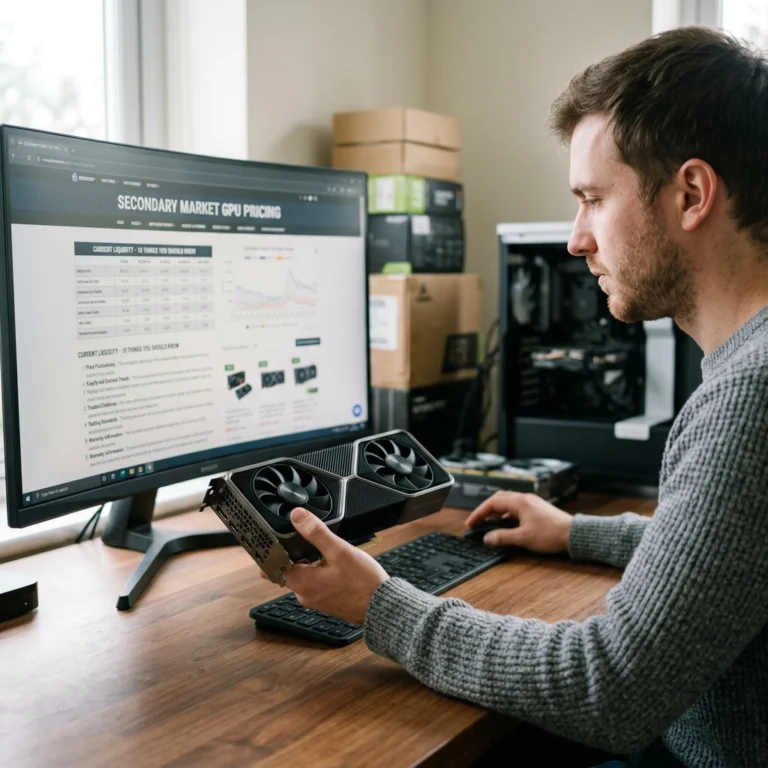
Because the largest holders of GPU compute are delaying their refresh cycles, the secondary market is experiencing a liquidity crunch. This scarcity has stabilized the floor price for used H100 80GB (SXM5 and PCIe) units far above traditional depreciation targets.
At GPU Resource, our internal data suggests that the "second-life" market for enterprise GPUs is decoupling from the broader commodity server market. We are seeing three primary factors driving this decoupling:
- The Inference Pivot: While training massive LLMs requires the latest H100/B200 clusters, inference can often be handled more cost-effectively on "older" A100 or H100 hardware. As more models move from the training phase to production, the demand for secondary compute to handle inference tokens is surging.
- Power Limitations: A rack of B200s requires significantly more power and specialized liquid cooling (Direct-to-Chip or Immersion) than a rack of H100s. Data centers that cannot immediately upgrade their power density or cooling loops are forced to retain their air-cooled or lower-density H100 systems, effectively removing them from the resale pool.
- Sovereignty and Private Clouds: Regulated industries are increasingly bringing AI in-house. These entities often prefer the lower acquisition cost of certified, refurbished enterprise GPUs over the high premium of new-in-box latest-gen hardware, provided they can find verified supply.
Technical Guts: Networking and Interconnect Longevity
The value of a remarketed GPU isn't just in the silicon itself; it is in the ecosystem it supports. The H100 was the first generation to truly leverage fourth-generation Tensor Cores and the Transformer Engine, which remain highly relevant for today’s mixture-of-experts (MoE) models.
More importantly, the interconnect technology: NVLink 4.0 and the integration with ConnectX-7 400G NICs: means that used H100 clusters can still participate in high-performance distributed training. Unlike the transition from the V100 to the A100, where the architectural jump was so vast it rendered the older units nearly obsolete for modern workloads, the transition from H100 to B200 is more of a continuous evolution. This technical "staying power" is a primary reason why asset recovery specialists are seeing higher-than-expected bids for decommissioning 8-GPU HGX baseboards.
Why Traditional ITAD Fails the GPU Category
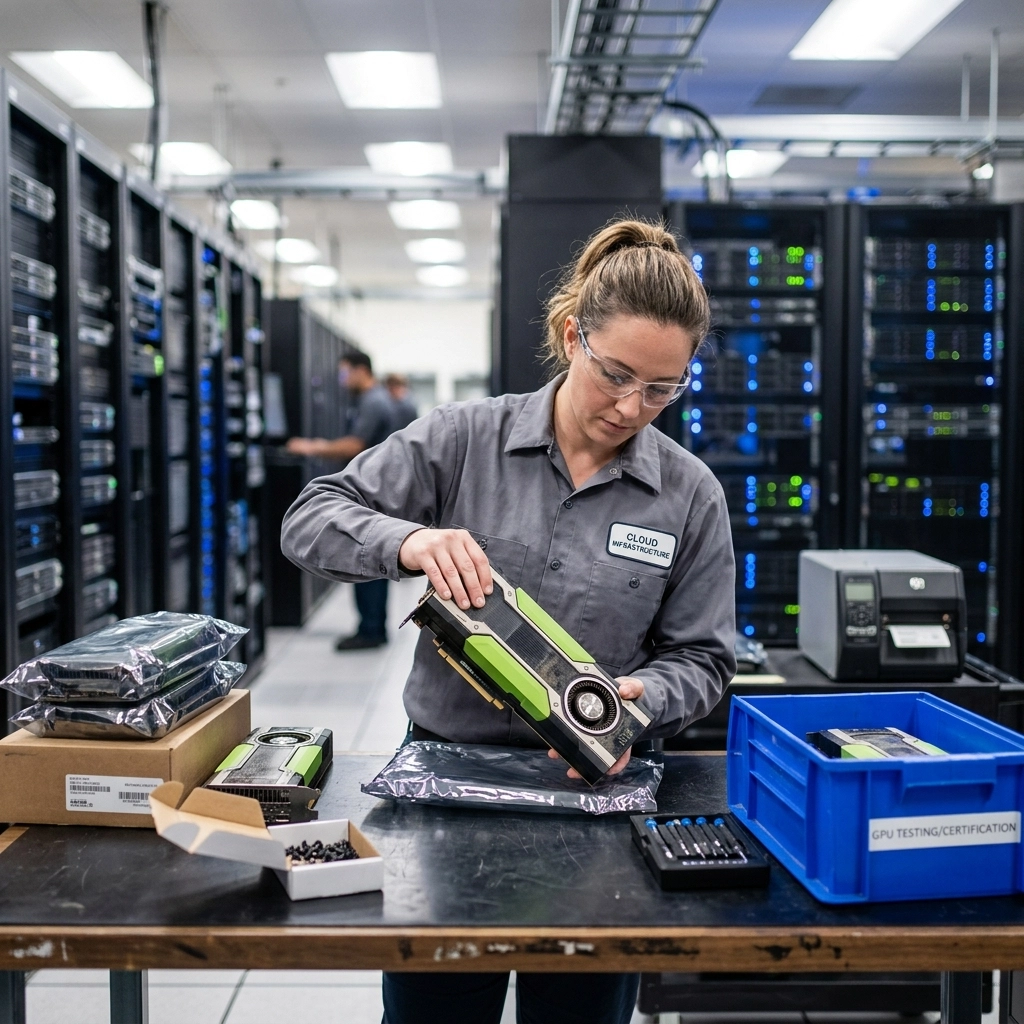
Standard IT Asset Disposition (ITAD) providers are generally ill-equipped to handle high-value GPU remarketing. Most ITAD firms operate on a volume-and-weight basis, treating servers as generic x86 commodities. They lack the technical depth to verify the integrity of HBM3 memory, the state of the NVLink bridges, or the specific firmware requirements that distinguish a high-value enterprise GPU from a consumer-grade equivalent.
GPU remarketing requires a specialized approach that focuses on:
- Component-Level Valuation: Understanding the price spread between SXM5, PCIe, and OAM form factors.
- System Integrity: Testing the High-Speed Serialization/Deserialization (SerDes) components that are prone to wear in high-duty-cycle AI environments.
- Market Timing: Navigating the "Blackwell gap" to ensure assets are liquidated at the peak of their secondary market value.
At GPU Resource, we utilize our proprietary GPU Market Pulse Tool to provide real-time valuation metrics that traditional ITAD providers cannot match. We look at the "chip-to-rack" economics, ensuring that sellers extract the maximum residual value from their silicon, networking switches, and optics (transceivers/DACs).
Strategic Recovery: Beyond the Silicon
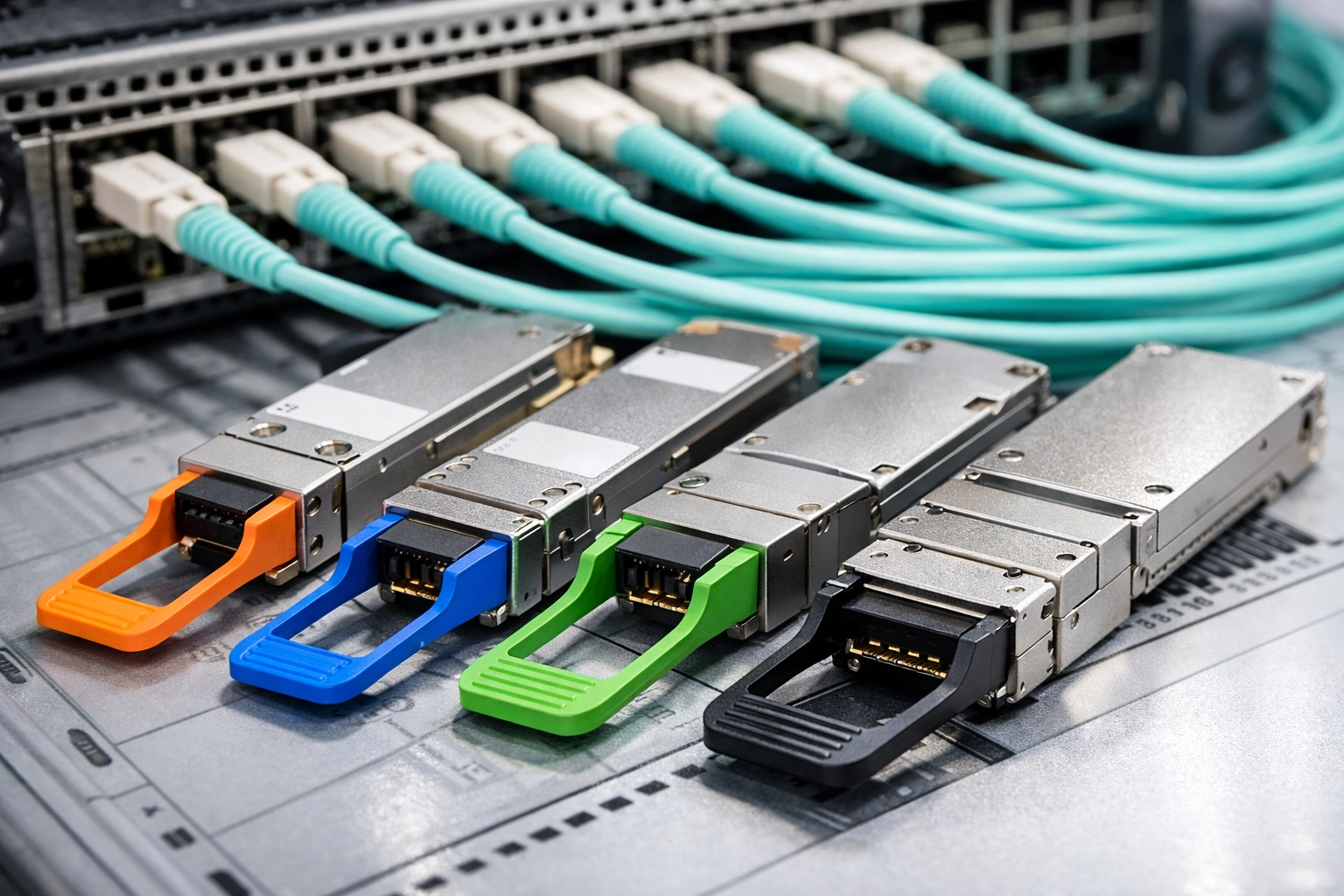
When we analyze the GPU Pulse Market Report, we see that the remarketing value is increasingly tied to the optics and networking. With 400G and 800G optics still facing supply constraints, the recovery of OSFP and QSFP-DD modules from decommissioned clusters can represent 15-20% of the total asset recovery value.
Asset hugging often leads to a "cliff" where hardware is held too long, and its value drops precipitously once the next-gen supply stabilizes. The challenge for CFOs and Data Center Operations Managers is to identify the precise inflection point where the cost of power and maintenance for an H100 cluster outweighs its revenue-generating potential, and the remarketing value is still at a premium.
Conclusion: Navigating the Second-Life Cycle
The AI hardware supercycle has rewritten the rules of IT asset management. "Asset Hugging" is a rational response to a supply-constrained environment, but it carries the risk of holding depreciating assets past their peak recovery window.
As we move deeper into 2026, the delta between "hugging" and "harvesting" will define the fiscal health of many compute-heavy organizations. Professional services in this space must move beyond simple logistics; they must provide deep technical analysis of the hardware stack and its place in the global compute ecosystem.
GPU Resource provides the technical expertise and market intelligence necessary to manage these transitions. Whether you are looking to acquire verified secondary compute to bridge a capacity gap or seeking to liquidate a cluster of H100s to fund a Blackwell migration, our team offers the most accurate valuation and remarketing services in the industry.
For a comprehensive Fleet Refresh Assessment or to get a direct quote on your current hardware inventory, contact our business development team at info@gpuresource.com.
The secondary market for high-compute silicon is more complex than ever. Don’t leave your asset recovery to generalists. Work with the specialists who understand the "guts" of the machine.