Looking For Secondary Market GPU Pricing? Here Are 10 Things You Should Know About Current Liquidity
The secondary market for high-performance compute has evolved from a fragmented collection of resellers into a sophisticated B2B ecosystem. As of April 2026, the transition from Hopper-based architectures to mass-scale Blackwell deployment has created a unique liquidity window for enterprise-grade GPUs. For data center operators and institutional investors, understanding the technical and economic nuances of this market is no longer optional: it is a requirement for maintaining efficient capital cycles.
Navigating this space requires more than just checking spot prices. It requires an understanding of interconnect standards, thermal history, and the specific depreciation curves of HBM (High Bandwidth Memory). Here are 10 critical insights into the current state of secondary market GPU pricing and liquidity.
1. The Divergence of MSRP and Real-World Clearing Prices
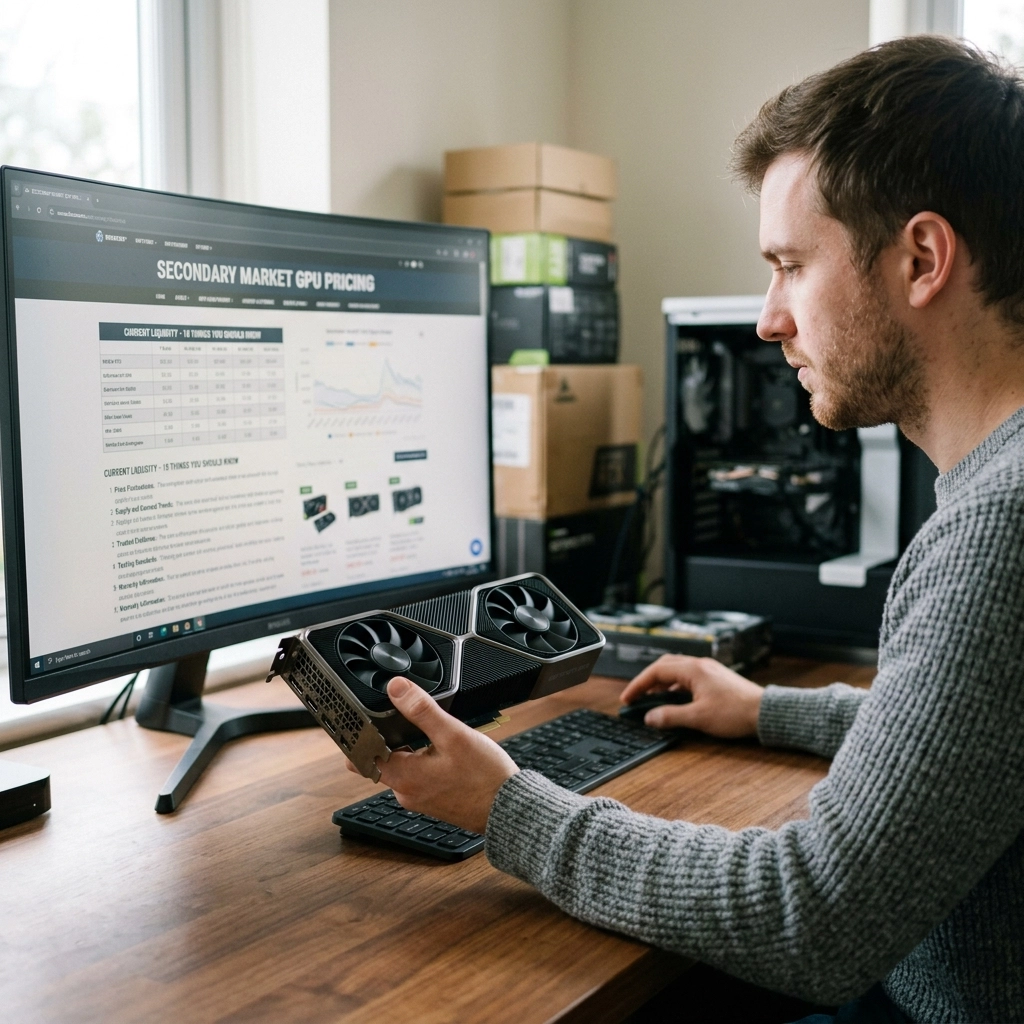
While NVIDIA’s official pricing for Blackwell-series (B200/B300) hardware sets the upper bound of the market, secondary prices for legacy H100 and A100 units frequently diverge from theoretical depreciation models. In the current 2026 landscape, we are seeing a "bifurcated" market. Publicly listed prices on secondary marketplaces often reflect optimistic reseller margins, whereas private, high-volume transactions: the kind tracked by the GPU Market Pulse Tool: clear at a 15–20% discount. Relying on "asking prices" rather than "clearing prices" can lead to significant errors in fleet valuation.
2. A100 80GB Remains the Liquidity Floor
Despite being two generations behind the leading edge, the A100 80GB (specifically the SXM4 variant) remains the most liquid asset in the secondary market. The reason is technical: the 80GB HBM2e buffer remains sufficient for a vast majority of mid-sized inference and fine-tuning workloads. While H100s saw extreme price volatility throughout 2024 and 2025, the A100 has maintained a remarkably steady "floor price." For organizations looking to exit legacy positions, the A100 represents the easiest asset to liquidate without massive slippage.
3. Server-Level Economics Over Individual Components
In the enterprise secondary market, loose GPUs are increasingly difficult to move. The market has shifted toward "integrated liquidity," where the value is found in the complete 8-GPU baseboard or the fully populated HGX/DGX system. In 2026, a refurbished H100 8-GPU server typically trades at roughly 35–40% of its original 2023 purchase price. However, trying to sell those same eight GPUs individually results in a lower aggregate return due to the scarcity of high-quality, validated HGX baseboards and NVSwitch assemblies.
4. The "Inference Arbitrage" of Older Silicon
A key driver of current liquidity is the rise of specialized inference providers. These operators are not chasing the absolute peak TFLOPS of a B200; they are optimizing for cost-per-completed-task. This has created a second life for hardware like the A30 and L40S. As larger models move to Blackwell for training, the secondary market for "inference-efficient" legacy cards has spiked. Using a Fleet Refresh Assessment can help operators determine if their current hardware is more valuable as a resale asset or as an internal inference resource.
5. Interconnect Standards Dictate Resale Velocity
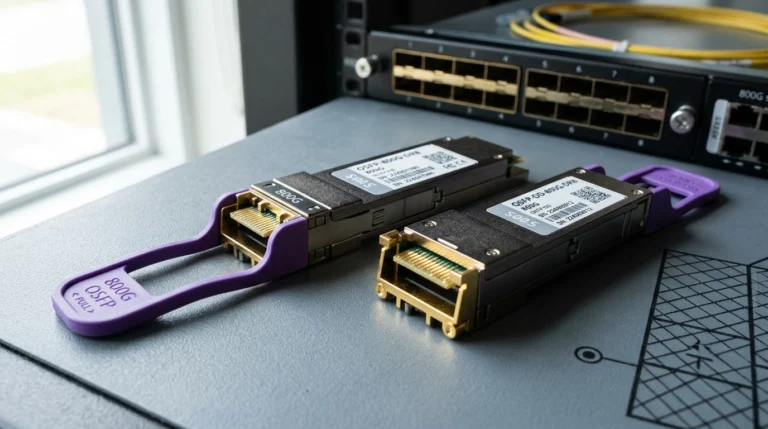
The secondary market value of a GPU is now inextricably linked to its networking capabilities. An H100 with standard PCIe connectivity is currently clearing 25% slower than its SXM5 counterpart with high-speed InfiniBand or 800G Ethernet support. As data center fabrics move toward 1.6T speeds, hardware that cannot support modern HSIO (High-Speed I/O) protocols is seeing its liquidity dry up faster than the silicon itself is becoming obsolete.
6. Hyperscaler Decommissioning Cycles
We are currently in the middle of a major fleet rotation from Tier-1 hyperscalers (AWS, Azure, GCP). When a major provider decommissions a cluster of 20,000 H100s, it creates a temporary supply shock in the secondary market. Smart buyers monitor these cycles to acquire hardware at deep discounts. Conversely, sellers must time their exits to avoid these high-volume liquidation events. Tracking Industry Analysis is essential to stay ahead of these macro-supply shifts.
7. The Complexity of GPU ITAD
IT Asset Disposition (ITAD) for GPUs is significantly more complex than standard server hardware. The presence of proprietary firmware and sensitive data within the HBM and on-board controllers requires certified data destruction protocols. Secondary market buyers are increasingly demanding "clean" hardware with verified chains of custody. Sellers who fail to provide professional ITAD documentation are seeing their assets discounted by up to 10% to account for the risk of data leakage or firmware tampering.
8. Impact of the Rubin Architecture Reveal
NVIDIA’s accelerated roadmap: moving from Blackwell to the Rubin architecture: has shortened the expected "useful life" of current assets. In the 2026 market, secondary buyers are pricing in a much steeper depreciation curve for H200 and B100 units. The "wait-and-see" approach from large-scale buyers has decreased mid-term liquidity, making it critical to use sophisticated Intelligence tools to identify buyer windows before the next hardware reveal further erodes value.
9. Power Constraints Drive Secondary Demand
As power availability becomes the primary bottleneck for new data center builds, many operators are turning to the secondary market to find hardware that fits their existing power envelopes. A facility capped at 20kW per rack cannot easily host a full Blackwell cluster, which drives sustained demand for older, less power-dense H100 and A100 configurations. This "infrastructure-constrained demand" provides a liquidity buffer that traditional tech-cycle models often miss.
10. Proprietary Valuation Tools vs. Rule-of-Thumb
Traditional ITAD valuation methods: usually based on straight-line depreciation: are failing in the AI era. GPU Resource’s proprietary valuation tools provide a granular look at the market by integrating real-time auction data, hyperscaler procurement cycles, and semiconductor supply-chain health. Relying on "market hearsay" for a multi-million dollar GPU fleet is a recipe for capital inefficiency. For precise, real-time data, professional services like GPU Pulse are the industry standard.
Analysis: The Path Forward for Asset Recovery
The secondary market for GPUs is no longer a "used parts" business; it is a critical component of the global AI supply chain. As we move deeper into 2026, the ability to extract value from end-of-life or mid-life technology will be a primary differentiator between profitable data centers and those burdened by stranded capital.
Understanding liquidity in this space requires a technical lens. It’s not just about the silicon; it’s about the thermal efficiency of the server, the integrity of the HBM, and the compatibility of the networking fabric. As hyperscalers continue to rotate their fleets at an unprecedented pace, the secondary market will grow in volume, but also in complexity.