
Security Risks in GPU Disposal: Beyond the SSD
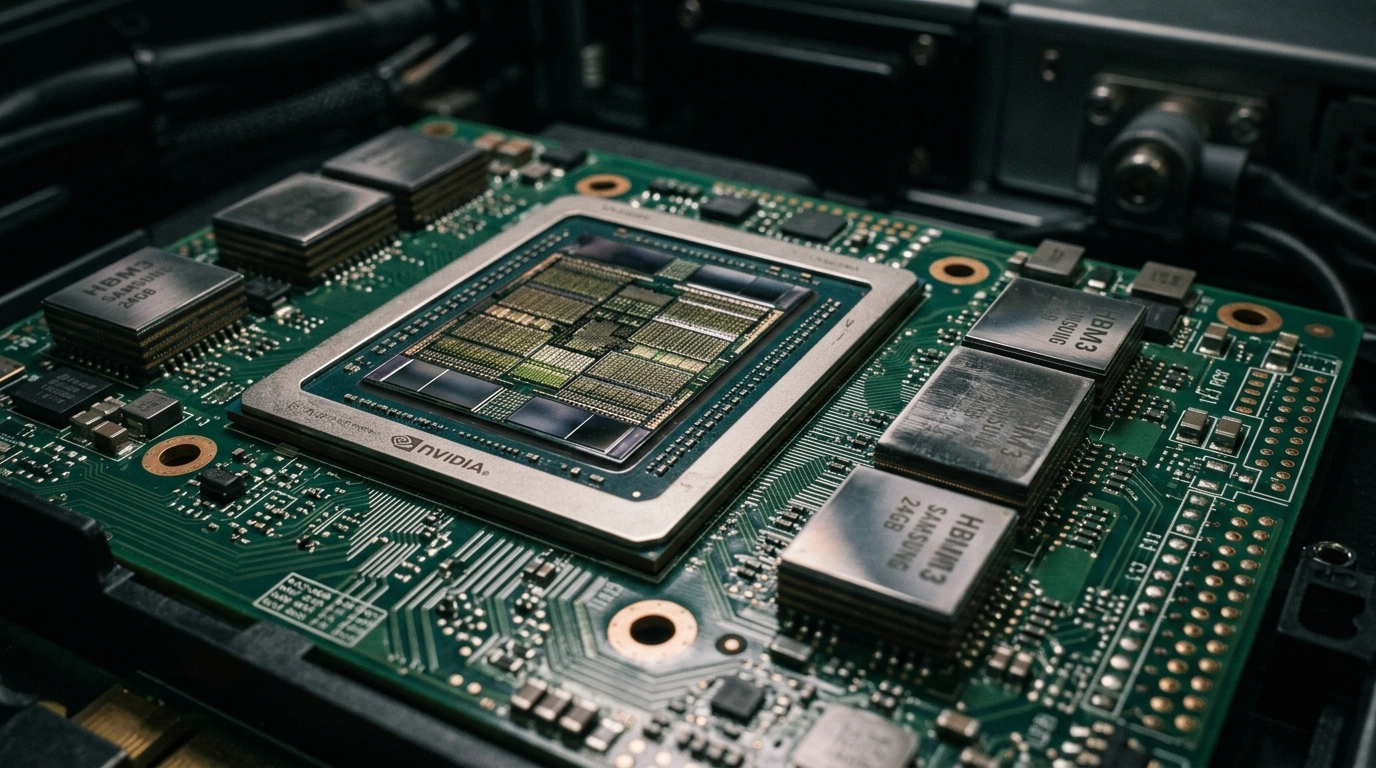
In the standard IT Asset Disposition (ITAD) workflow, the focus is almost exclusively on NAND flash and mechanical storage. However, as the industry transitions into the AI hardware supercycle, the security perimeter has shifted to the compute layer. Enterprise-grade GPUs, specifically the NVIDIA H100 and upcoming B200 platforms, represent a significant data persistence risk that standard drive-wiping protocols fail to address.
The HBM Persistence Problem
Modern AI infrastructure relies on High Bandwidth Memory (HBM) closely integrated with the GPU die. Unlike standard system RAM, the complexity of the memory controller and the sheer volume of data processed during LLM training create "data remnants" that can persist across soft reboots.
Recent research, such as the LeftoverLocals (CVE-2023-4969) vulnerability, has demonstrated that uninitialized local memory can leak sensitive data between processes. In a remarketing or second-life scenario, a GPU that has not undergone a verified hardware-level reset may still contain fragments of weights, proprietary model architectures, or sensitive training data in its local memory buffers.
Firmware Vulnerabilities and Supply Chain Integrity
Beyond the memory layer, the firmware: including the Video BIOS (VBIOS) and the Baseboard Management Controller (BMC) on high-end nodes: can be compromised to maintain persistence for malicious code. For businesses engaged in GPU remarketing or fleet refreshes, ensuring that these components are returned to a "factory-clean" state is critical for maintaining supply chain integrity.
Standard software-level wipes are insufficient for high-performance silicon. Certified data destruction now requires:
- Authenticated Firmware Resets: Ensuring the root-of-trust has not been tampered with.
- HBM Purge Cycles: Hardware-level commands to zero out all high-bandwidth memory stacks.
- Cryptographic Erase: Utilizing built-in hardware encryption keys to render any remaining data unrecoverable.
Strategic Asset Recovery
At GPU Resource, we view ITAD not as a cost center, but as a critical supply-chain function. As demand for used H100 and A100 systems remains high, ensuring these assets are secure is the only way to protect their residual value. Utilizing our proprietary valuation tools, we help organizations maximize recovery while mitigating the catastrophic risks of data leakage.
Protecting your enterprise's intellectual property requires moving beyond the SSD. Technical audit and certified hardware-level sanitization are now the baseline for any professional GPU lifecycle strategy.
For buyer/seller connections or to request our certified data destruction protocols, contact our team at info@gpuresource.com.